
Between the Olives and the Sea
The drive from Faro takes you east, away from the familiar rhythms of the central Algarve. You pass through towns that feel less staged, where the architecture is functional rather than aspirational, where the light changes as you approach the coast. When you turn off the main road and find yourself on a narrower route bordered by fig and carob trees, you know you’ve entered a different geography altogether.
This is the Eastern Algarve—a region that has resisted the aesthetic of the western coast, where cliffs plunge to golden beaches and resorts cluster like villages of their own. Here, the landscape is shaped by something older and more patient: the tides. They carve the marshlands, shift the salt ponds, determine what is accessible and what remains private. The Ria Formosa lagoon sits like a green moat between the mainland and the barrier islands, a constantly morphing ecosystem that separates the familiar from the remote.
Cacela Velha appears on its hilltop first—a fortress village of perhaps fifty people, whitewashed and austere, its sixteenth-century church overlooking the lagoon with the kind of calm that suggests centuries have passed differently here. Below it, Fábrica occupies a stranger position: a fishermen’s village with wooden walkways threaded through salt marshes, accessible by boat at high tide, by foot when the waters retreat. It is the kind of place that might have inspired poetry, and indeed it did—Ibn Darraj al-Qastalli was born here in 958, long before it became a village of fishermen and salt workers.
The sensory register shifts as you move deeper into this landscape. The air carries salt and vegetation. Birdsong becomes more present than traffic noise. The light, particularly in late afternoon, seems to pause and consider the horizon rather than rush across it. You begin to understand that you have not simply left one part of Portugal and arrived in another; you have stepped into a tempo that operates according to different rules.
The Estate
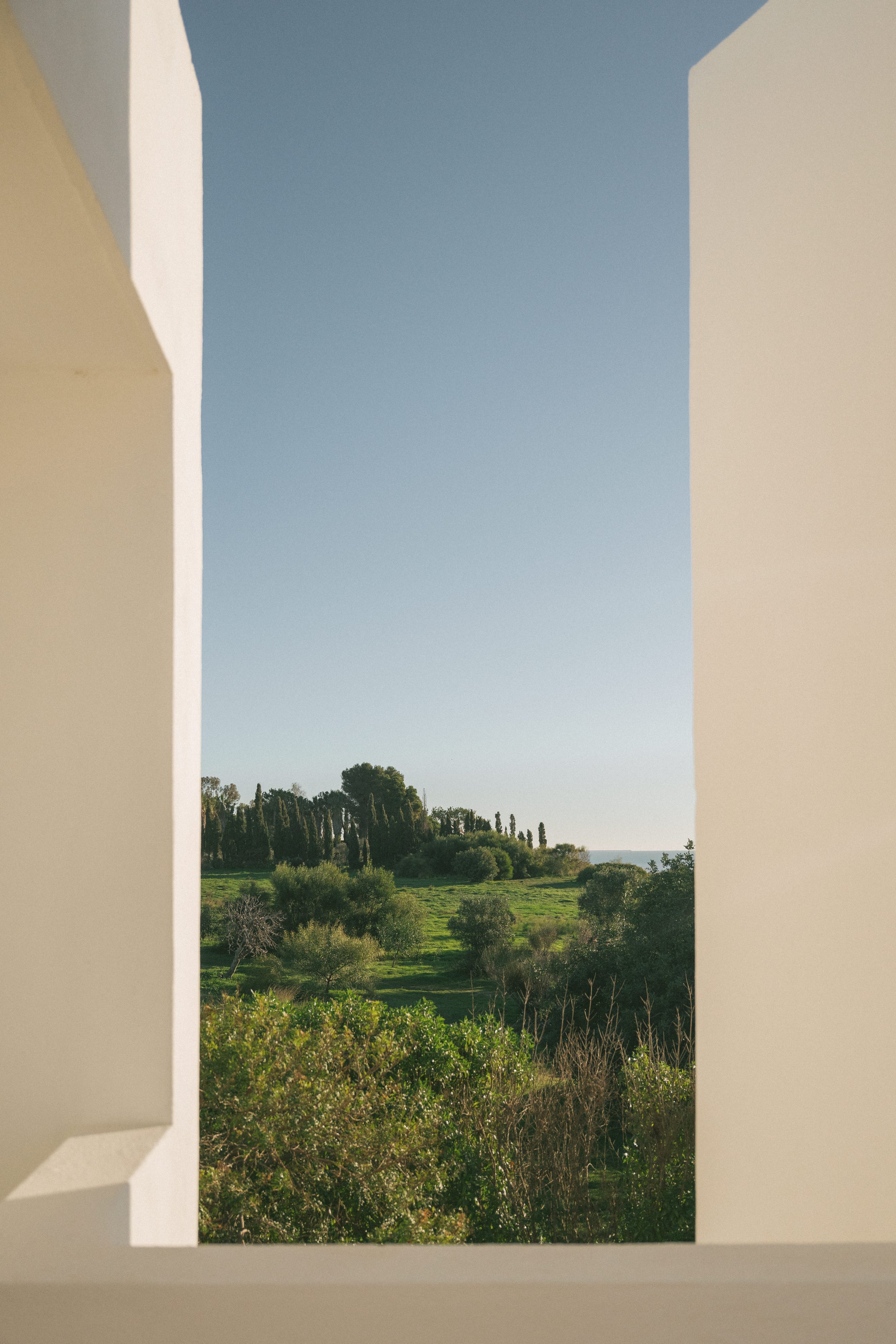
Somewhere within this geography of tides and light, surrounded by olive and almond groves, sits Quinta do Muro. It emerges gradually—a sequence of whitewashed buildings arranged across thirteen hectares, shielded by the lagoon itself, which shifts and reveals itself according to the hour. The estate was conceived and built by French architect Pierre-Louis Faloci between 1983 and 1988, during a period when his architectural philosophy was crystallising around ideas of landscape framing and optical unity. The work would later be recognised with the L’Équerre d’Argent, France’s highest architecture prize. What Faloci understood, and what the estate demonstrates across every surface, is that architecture need not dominate landscape—it can instead arrange it, frame it, draw the eye through carefully considered openings and proportions toward views both near and distant.
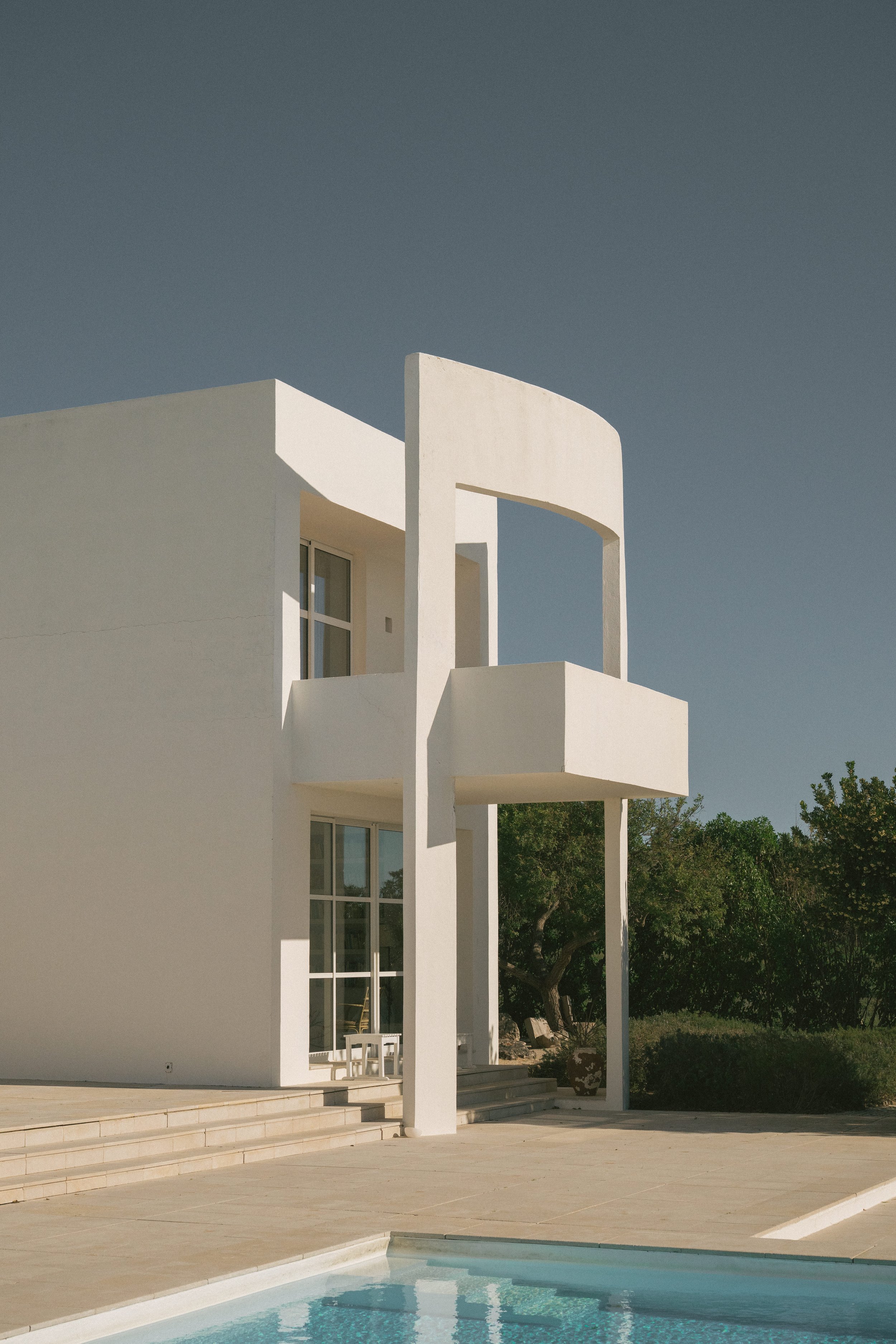
The main residence sprawls across 1,200 square metres, oriented southward toward the ocean. It comprises three distinct structures—Corpo A, Corpo B, and Corpo C—each separated enough to feel like a discovery, yet connected by purpose and by the gardens that flow between them. The architectural language is consistent throughout: rendered whiteness, deep shadows cast by porticos and screen walls, a restraint that somehow feels generous rather than austere.
Corpo A functions as the estate’s heart. It contains two drawing rooms—one equipped for media, the other centred around a fireplace that suggests winter evenings despite the region’s mild climate—along with a winter dining room and a kitchen designed for the serious preparation of meals. On the north side sits the Salon de Café, deliberately positioned to capture shade during summer months while framing views of the sunset. Upstairs, two master suites occupy private terraces with sea-facing vistas. Below ground, a wine cellar holds the estate’s collection.
Corpo B accommodates four bedrooms, each with its own bathroom, each with a different relationship to the surrounding landscape. One opens onto a private garden; another connects to a first-floor terrace overlooking countryside. There is also a dormitory with two single beds—a quiet acknowledgment that not all guests arrive as adults, and that families retreat too. English-style gardens with climbing roses run along Corpo B’s length, creating spaces of soft enclosure within the larger property.
Corpo C contains a television and library room, a master bedroom with a sea-view terrace, a children’s room, and views toward a Zen garden with its own pavilion. Between Corpo A and C, two swimming pools serve different purposes: one square and shallow for children, the other vast and rectangular, oriented toward the sea, designed for the kind of swimming that feels both purposeful and contemplative.
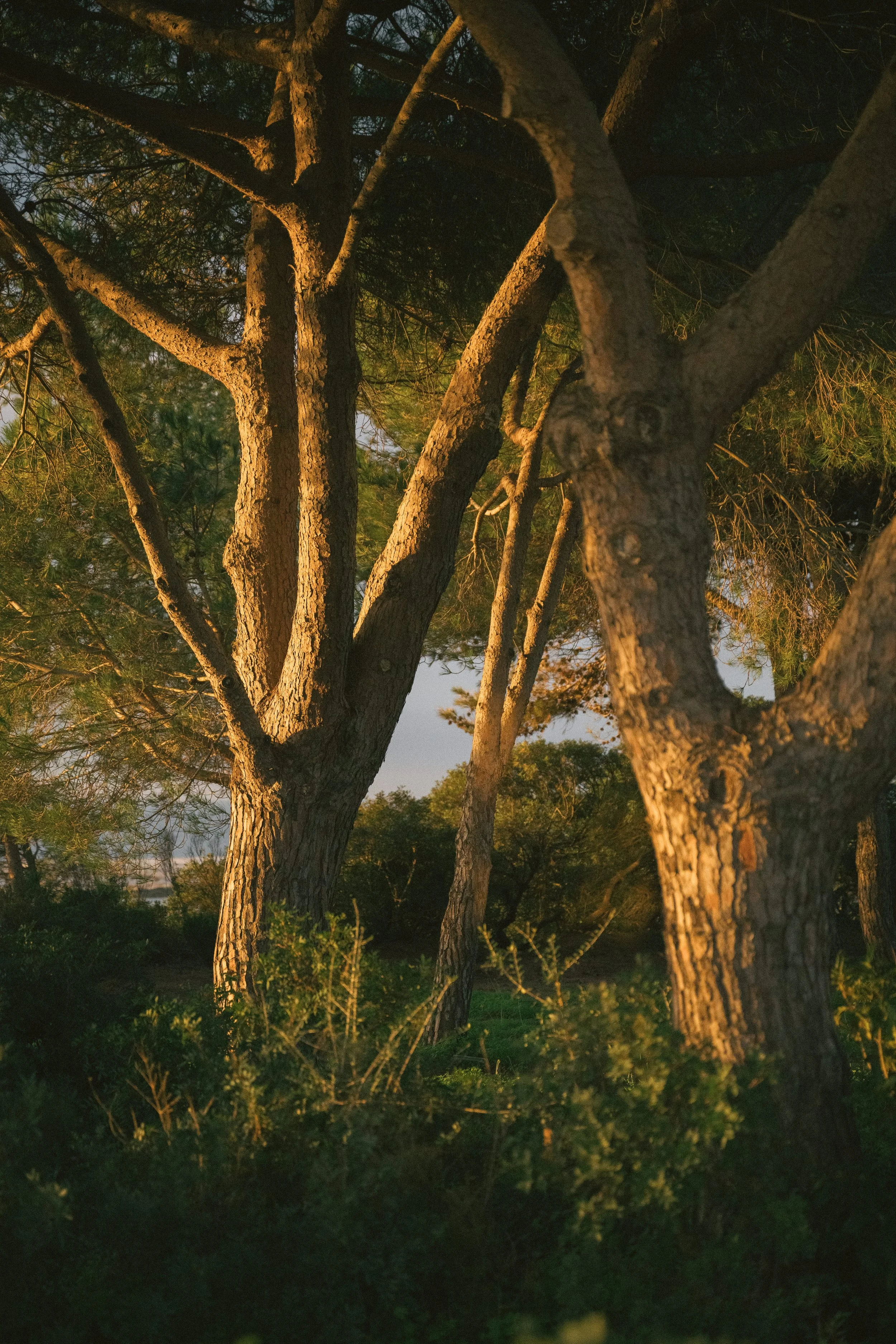
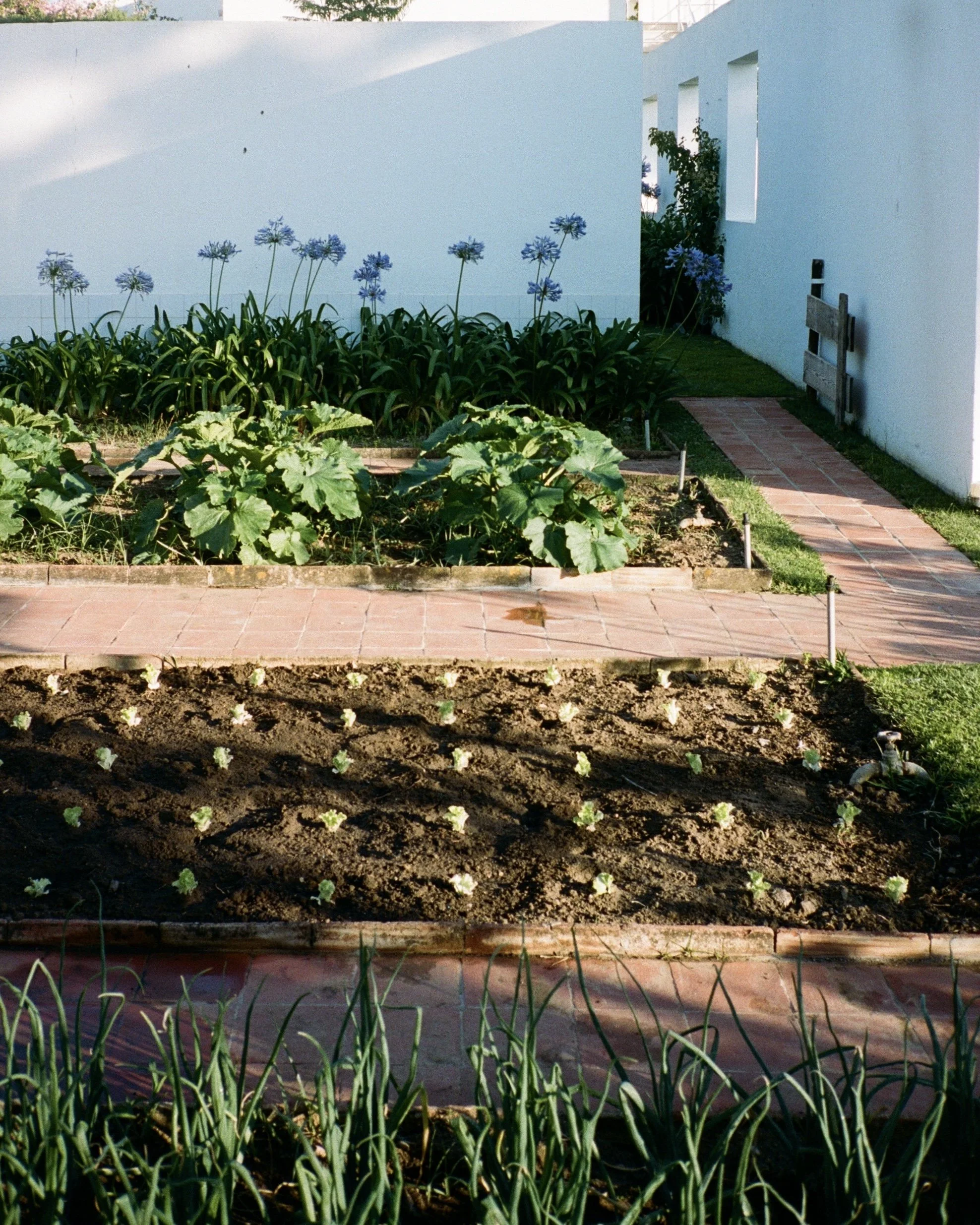
The gardens themselves are as essential as the buildings. Lavender fields interspersed with curry plant, rosemary, and thyme face the sea. Behind Corpo B lies an orchard and a vegetable garden that supplies the kitchen throughout the growing season. A meditation deck sits positioned for sunrise or sunset according to preference. The Zen garden beside Corpo C offers stillness. And threading through all of this—across the thirteen hectares—are groves of olives and almonds, trees that have occupied this land far longer than any building, and which likely will after.
What Faloci articulated in his design philosophy was the idea that architecture doesn’t exist separate from landscape but rather orchestrates it. The whiteness of the buildings provides a unifying element, yes, but it is the careful arrangement of openings, the placement of screens, the consideration of sightlines that transforms the property into something more than a house. It becomes a frame through which the landscape performs itself differently depending on where you stand, what time of day it is, what the tides have chosen to reveal.
The connection to the beach itself is entirely unconventional. At high tide, you reach the sand by boat or kayak, emerging into the kind of wild, undeveloped shoreline that recalls Long Island before it was entirely claimed. At low tide, the walk across exposed salt flats reveals a different landscape altogether—one that is navigable, intimate, surprisingly textured. The beach feels like a discovery each time, because the lagoon and the tides ensure that it genuinely is.
When a group arrives at Quinta do Muro, they arrive at a sanctuary. Not in the spiritual sense alone, though that dimension is certainly available. Rather, in the architectural and geographical sense: a thirteen-hectare territory enclosed, protected, completely at your disposal for the duration of your stay. The estate functions as a single entity—staff, gardens, pools, buildings, access to landscape and sea—dedicated entirely to the experience of those who have chosen to step away from elsewhere.
This is the foundation upon which retreat programming operates. The physical reality of exclusivity and containment creates the condition for genuine rest. The estate’s logistics are managed with the kind of invisible efficiency that only emerges from three decades of practice. Chef Marie José has been present at Quinta do Muro for over thirty years, which means the rhythm of the kitchen is already established, the sourcing is already understood, the particular way that food tastes when it comes from soil you can see from your bedroom window is already woven into the estate’s daily operation.
The meals are structured around what grows here and what arrives fresh from the coast. Sun-ripened tomatoes from the vegetable garden appear in lunch dressed simply. Fragrant herbs—some foraged, some cultivated—flavour grilled fish sourced from fishing communities along the coast. Breakfast is constructed to nourish rather than indulge, yet it arrives beautiful. Dietary requirements are accommodated not as exceptions but as conversations integrated into the kitchen’s planning. Fresh fruit is available throughout the day. Organic teas and herbal infusions made from estate plants sit waiting. Mineral water and healthy snacks appear as needed, as if the place itself anticipates what your body requires.
The physical layout of the estate determines how a retreat naturally unfolds. Morning yoga classes are held on the meditation deck or, depending on tidal conditions and seasons, directly on the beach itself—a practice with an entirely different resonance when your mat is sand and the horizon opens in every direction. Afternoon classes might use the terraces of Corpo A or the spaces between buildings where the light filters differently as hours pass. The estate provides all equipment needed. The rhythm of two daily classes, separated by hours in which guests can read, swim, walk through the groves, sit in gardens, or simply occupy a terrace without agenda, allows for a particular kind of restoration.
Optional therapeutic services—massage, osteopathy, acupuncture—are available in limited quantity, carefully calibrated so that the estate never feels like a clinic. These services support the retreat’s intention rather than drive its narrative. The accommodation itself reflects this philosophy of spaciousness and choice. Three master suites occupy approximately seventy square metres each, with vast terraces opening to sea views. Two medium double rooms offer either terraces or private garden access. Three standard doubles provide comfortable, quiet spaces. All rooms include private ensuite bathrooms. Single occupancy is offered as standard, ensuring that those who arrive alone have genuine privacy, and that couples can choose it deliberately rather than by necessity.
The typical stay is five nights—long enough to genuinely detach from the rhythms of ordinary life, to settle into a slower pace, to notice shifts in energy and perspective. For yoga teachers leading groups, the estate becomes an extension of their teaching. The landscape—its tides, its light, the way the olives frame distant horizons—becomes part of the curriculum. The farm-to-table meals support whatever intention a retreat carries. The absence of other guests, other distractions, other competing claims on attention creates conditions in which transformation, or simply genuine rest, becomes possible.
Optional excursions venture into the surrounding region—walking through Cacela Velha, exploring the lagoon by boat, visiting artisans in nearby villages—but these are offered as enrichment, never as requirements. The estate itself is often sufficient. The point, ultimately, is not to fill time but to create space. Space for the body to unwind, for the mind to settle, for the kind of personal growth that emerges quietly, without fanfare, when someone steps away from everyday life long enough to remember who they are beneath all the accumulated obligations.
Quinta do Muro has existed in this landscape since 1983—long enough to have become part of it rather than something imposed upon it. The architectural language, the gardens, the operational rhythms have matured beyond trend or fashion. It remains what Faloci intended: a place that frames landscape rather than dominating it, that works with the natural pace of this particular region—the tides, the light, the seasons—rather than attempting to override them.
There is a quiet permanence to it. Not the permanence of a landmark, which suggests static monumentality, but rather the permanence of something that has earned its place through consistency, through genuine attention to detail, through understanding that the people who arrive are not seeking novelty but rather the opposite. They are seeking a place and a rhythm that will hold them gently, that will not demand anything except presence.
If you teach yoga, if you lead retreats, if you work with groups seeking rest and renewal, Quinta do Muro exists as a venue that asks very little of you operationally and offers everything you might need—landscape, accommodation, food, space—so that your work can unfold as fully as possible. If you arrive as an individual or couple simply seeking to step away, the estate is equally prepared to offer that sanctuary.
The Eastern Algarve remains largely as it has been for centuries—shaped by tides rather than tourism, governed by seasons rather than schedules. Quinta do Muro sits within that landscape as a testimony to what becomes possible when architecture, land stewardship, and genuine hospitality align. Between the olives and the sea, thirteen hectares hold quiet space for whatever you arrive carrying, and whatever you might become in the holding.